FUT Holds 9-0 Practice Lead Over HMBLE

FUT holds a 9-0 lead over HMBLE in a Brawlytics scrim snapshot dated October 1. The displayed points cover five modes. Heist supplies the largest row, while Gem Grab, Brawl Ball, Hot Zone and Knockout all add to the same side of the practice card.
The listed rows are Gem Grab 2-0, Heist 3-0, Brawl Ball 1-0, Hot Zone 2-0 and Knockout 1-0 in FUT–HMBLE order. Together they reproduce the nine-point aggregate for FUT and zero for HMBLE. Every named row favors FUT, giving the visible session a broad review signal across the card.
The limits are equally important. Brawlytics presents this as scrim data, and completion is unconfirmed. Official results, championship standings and permanent team rankings sit outside the scope of this card. It records what the page displayed for a dated practice session.
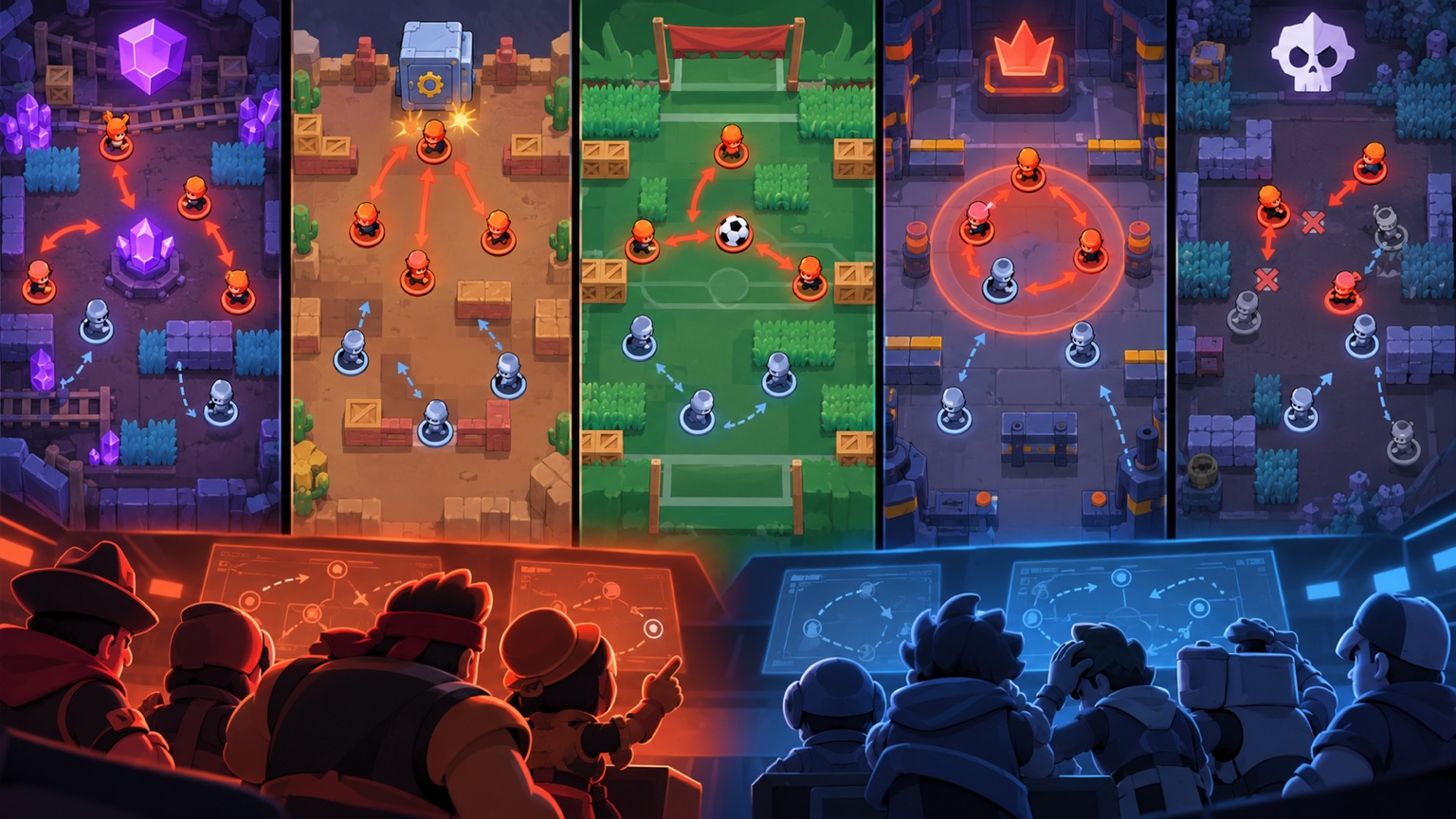
The five-mode spread is the central detail
Heist contributes three points, the largest block on the card. Gem Grab and Hot Zone contribute two each. Brawl Ball and Knockout contribute one each. That distribution gives FUT several different situations to review, from objective pressure to elimination-based play, without revealing the maps, drafts or player-level decisions behind the outcomes.
For FUT, the next question is whether the same principles recur across the replays. Clean results in five modes could come from several causes: early control, more stable drafts, better conversion after an advantage or simply experimentation by the opponent. Only replay and draft records can separate those explanations. The score card identifies where the review should begin.
HMBLE’s review should stay just as specific. A zero on the aggregate can encourage an overly broad response, but each mode may have failed at a different stage. The Heist games can be checked for safe pressure and base defense. Gem Grab and Hot Zone can be checked for control after the opening exchange. Brawl Ball and Knockout require their own positioning questions.
This mode-by-mode approach avoids treating every loss as evidence of one universal problem. It also creates measurable targets for the next session. Winning an opening interaction, maintaining control longer or closing a narrow game are more useful review goals than trying to erase the entire aggregate at once.
How to read a wide scrim score responsibly
A 9-0 line is striking, but practice sessions are designed for testing. Teams may trial unfamiliar drafts, maps or roles. The visible result should therefore be used as a dated diagnostic snapshot. It can guide preparation without becoming a public claim that HMBLE would receive the same outcome in an official series.
Readers should keep the opponent order, date and completion status whenever sharing the figure. Removing any of those details changes its meaning. If the page later adds games, the current card becomes an earlier checkpoint in the session.
- Preserve the practice label and October 1 date whenever citing the 9-0 score.
- Review Heist separately because it contributes the largest three-point row.
- Compare future sessions mode by mode instead of expecting the full aggregate to repeat.
| Mode | FUT | HMBLE |
|---|---|---|
| Gem Grab | 2 | 0 |
| Heist | 3 | 0 |
| Brawl Ball | 1 | 0 |
| Hot Zone | 2 | 0 |
| Knockout | 1 | 0 |
FUT’s displayed 9-0 lead is notable because it spans all five named modes on the card. Heist is the largest contributor, Gem Grab and Hot Zone add two points each, and the remaining modes complete the total. That breadth gives both teams a useful review index. Draft notes and replay footage are needed to determine why each row moved in the same direction. Completion is unconfirmed, and the session is practice, not an official match. Within those boundaries, the card is strong evidence of a one-sided displayed segment and a clear invitation to review each objective separately. FUT can test whether its decisions are repeatable; HMBLE can turn a difficult aggregate into five smaller, actionable questions. Each later practice card can then be measured against the same mode list.