Double Swoosh Data Favors Wendy, Trunk
Wendy and Trunk lead the recorded win-rate board for Double Swoosh, according to an October 8 BrawlMetrics snapshot of the Gem Grab map. The page counts 209,982 battles from the map’s last appearance. It also identifies a very different popularity leader: Edgar appears most often, despite a lower displayed win rate than the top statistical picks.
The source’s timestamp is important. BrawlMetrics marks the page as last updated at 02:36 UTC on October 8 and says Double Swoosh is not currently in rotation. This is not a live guide to a map available at the moment; it is a look at recorded games from its last appearance. The values may change when the map returns and more matches enter the sample.
The top displayed win rates are Wendy at 68%, Trunk at 67.6% and Hank at 67%. Their use rates are small: 0.4%, 0.5% and 0.2% respectively. A high win rate alongside a low use rate can still be interesting, but it should not be translated into a promise that every player will get the same result. Selection may depend on who uses a brawler and which matchups they choose.
Edgar appears in 4.8% of recorded picks and wins 56% of those displayed games. Poco appears in 3.3% at 52.5%, while Emz appears in 3.1% at 43.2%. The contrast makes the page useful: popularity and observed success are different measurements. Neither alone identifies the decisions that won an individual match.

A high rate is not the whole draft
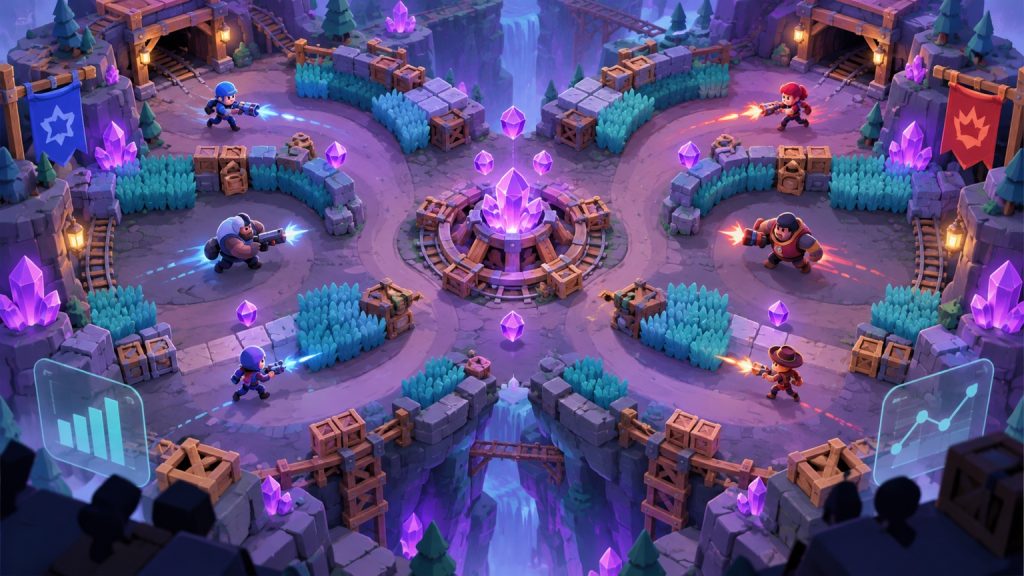
Double Swoosh is a Gem Grab map, so the central mine and routes around it shape the match. A team has to collect gems, maintain control and keep its carrier safe. A high percentage for a rare pick may reflect favorable situations; it is not automatically a universally best first choice. BrawlMetrics ranks brawlers from recorded battles, but the table does not identify every draft condition behind each result.
That is why Wendy’s 68% should be read together with 0.4% use. Trunk’s 67.6% belongs beside 0.5% use, and Hank’s 67% beside 0.2%. All three appear near the top of the page, but the amount of selection differs sharply from Edgar’s 4.8%. A player deciding what to use when the map returns should look at both columns and consider their own available composition.
The low end of the observed board is informative too. Bonnie and Eve each sit at 31% in the snapshot, with 0.4% and 0.5% use. This does not make either brawler unusable across Brawl Stars. It says only that their recorded Double Swoosh results were weak in this sample. Other maps, teammates and future balance changes could yield different results.
The source covers 107 brawlers with recorded picks. That gives the snapshot breadth, but not the experimental control of a balance test. BrawlMetrics says its page uses real recorded battles, never simulated numbers. It remains a third-party sample, and the article should name that provenance whenever the figures are quoted.
Recent site coverage looked at broader rankings and individual brawler movement. This report is intentionally narrower. It asks what one named map’s recorded matches show, with a fixed timestamp and rotation status attached. It should be refreshed only when the map reappears or the data changes materially.
What to check when the map returns
First, verify that Double Swoosh is actually in the current Gem Grab rotation. Then reopen the BrawlMetrics page and note the updated sample size and timestamp. A guide written from the present snapshot should not silently pass as live data weeks later.
Next, compare win rate with use rate. Popularity can identify familiar picks, while win rate can reveal options worth testing. The better practical question is whether a pick gives the team a way to control the central mine and protect gems against the specific opposing lineup. No single percentage can answer that entire draft question.
Finally, keep the source’s limitations attached to the story. The figures describe observed games on Double Swoosh, not a Supercell ranking and not a forecast for an individual account. A transparent data report is more useful than an absolute tier-list claim.
- Double Swoosh is out of rotation in the cited snapshot.
- Wendy leads the observed win rate, while Edgar leads observed use.
- Recheck the page’s timestamp and sample when the map returns.

| Brawler | Win rate | Use rate |
|---|---|---|
| Wendy | 68% | 0.4% |
| Trunk | 67.6% | 0.5% |
| Hank | 67% | 0.2% |
| Edgar | 56% | 4.8% |
| Emz | 43.2% | 3.1% |
The latest recorded Double Swoosh sample tells a nuanced story. Wendy, Trunk and Hank top the displayed win rates, but each appears in a small share of picks. Edgar is much more common, while its measured win rate is lower. Emz shows how a familiar pick can be popular without matching the stronger observed results on this particular map. BrawlMetrics supplies a sizable battle sample and a dated update, yet the map is currently absent from rotation and the figures remain third-party observations. When Double Swoosh returns, a sensible player can use these numbers as one input, then check the new data and assess the actual map, team roles and opposing composition. The snapshot is a starting point for testing, not a universal answer.