TRIBE Edges UTOPIA 3-2 Across Five Modes
TRIBE leads UTOPIA 3-2 in a Brawlytics practice snapshot dated October 4. The aggregate is narrow, and the mode distribution is unusually clean: all five rows finish 1-0 to one side. TRIBE takes three different objectives, while UTOPIA answers in two.
The page lists Gem Grab 0-1, Knockout 1-0, Heist 1-0, Hot Zone 0-1 and Brawl Ball 0-1 in UTOPIA–TRIBE order. Those rows sum to two points for UTOPIA and three for TRIBE. There are no tied rows and no mode contributes more than one point.
The session is a new pairing inside the seven-day archive. TRIBE appears in an earlier scrim against TE, but the opponent, October 4 date and five-row pattern are different. Completion is unconfirmed. The result belongs to practice and should not be presented as tournament standings.
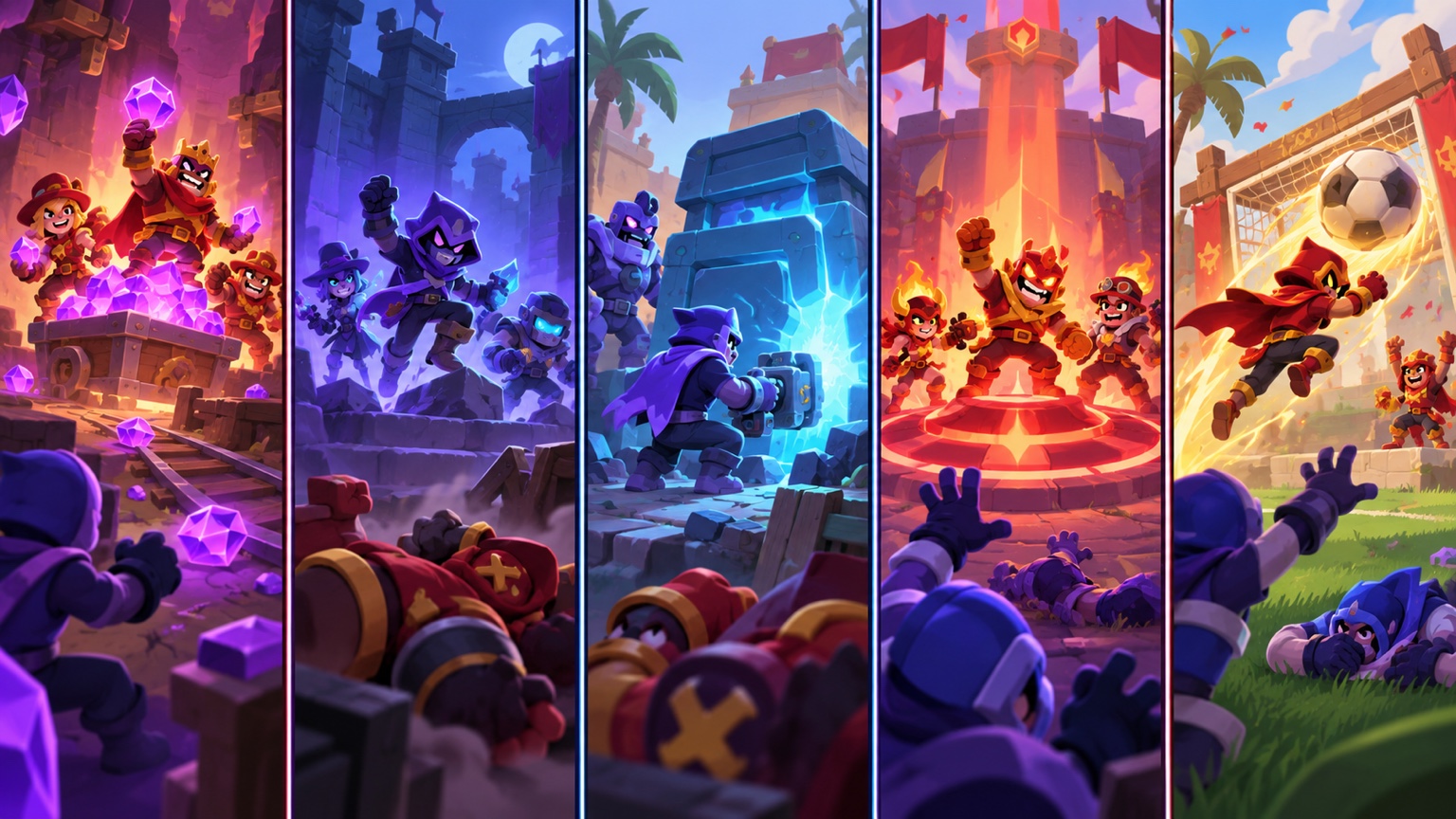
The lead comes from breadth across five modes
TRIBE’s three points are spread across Gem Grab, Hot Zone and Brawl Ball. That gives the team positive rows in resource control, fixed-zone occupation and goal conversion. UTOPIA’s replies arrive in Knockout and Heist, two modes that ask different questions about survival and objective pressure.
Because every row is 1-0, the aggregate does not contain a single dominant set that explains the outcome. TRIBE leads by winning one more mode. That makes draft breadth and transitions between objectives central review questions, though the score card alone cannot identify the cause of any row.
UTOPIA has a clear foundation instead of an empty aggregate. Knockout and Heist provide two successful environments to preserve. Review can compare the opening positions and closing decisions in those wins with the moments control shifted in Gem Grab, Hot Zone and Brawl Ball.
TRIBE can perform the inverse comparison. Three mode wins show breadth, but the two losses prevent a claim of complete control. If a later session adds maps or repeats the same objectives, the team can test whether the present distribution was stable or specific to these games.
A useful five-mode review checklist
The most informative next step is tagging the first meaningful advantage in every row: first stable lane, first objective conversion and the decision that closed the game. Applying the same labels across all five modes makes different objectives comparable without pretending they are identical.
Readers should preserve the UTOPIA–TRIBE source order and describe the total as a 3-2 TRIBE lead. The date and practice label keep the scope honest while the row list provides enough detail for a real follow-up.
- TRIBE leads Gem Grab, Hot Zone and Brawl Ball by 1-0 rows.
- UTOPIA leads Knockout and Heist by the same 1-0 margin.
- No individual mode is tied or contributes more than one displayed point.

| Mode | UTOPIA | TRIBE |
|---|---|---|
| Gem Grab | 0 | 1 |
| Knockout | 1 | 0 |
| Heist | 1 | 0 |
| Hot Zone | 0 | 1 |
| Brawl Ball | 0 | 1 |
TRIBE’s 3-2 edge over UTOPIA is built on breadth across five modes. Five rows produce five one-point results, with TRIBE winning three and UTOPIA winning two. The pattern gives each team useful positives and a direct list of objectives to revisit. TRIBE can investigate what carried across Gem Grab, Hot Zone and Brawl Ball, while UTOPIA can protect the decisions that worked in Knockout and Heist. The completion status is unconfirmed and the source records a scrim, so no formal ranking follows. As a practice baseline, however, the session is exceptionally readable. A future rematch can be compared by counting changed modes alongside changed points. Flipping any single row would level or reverse the present margin, which makes every review target concrete and prevents the 3-2 headline from hiding how competitive the session was. Reviewers can make that comparison stronger by tagging the opening control, first objective loss and final conversion in every replay. The same labels allow both teams to compare different modes without flattening their tactical differences. A later card can then show whether the improvement came from a stronger start, a better recovery or a cleaner close.